
Homeowner Guide
What a ceiling stain can mean, what to do right now, and when to book an inspection.
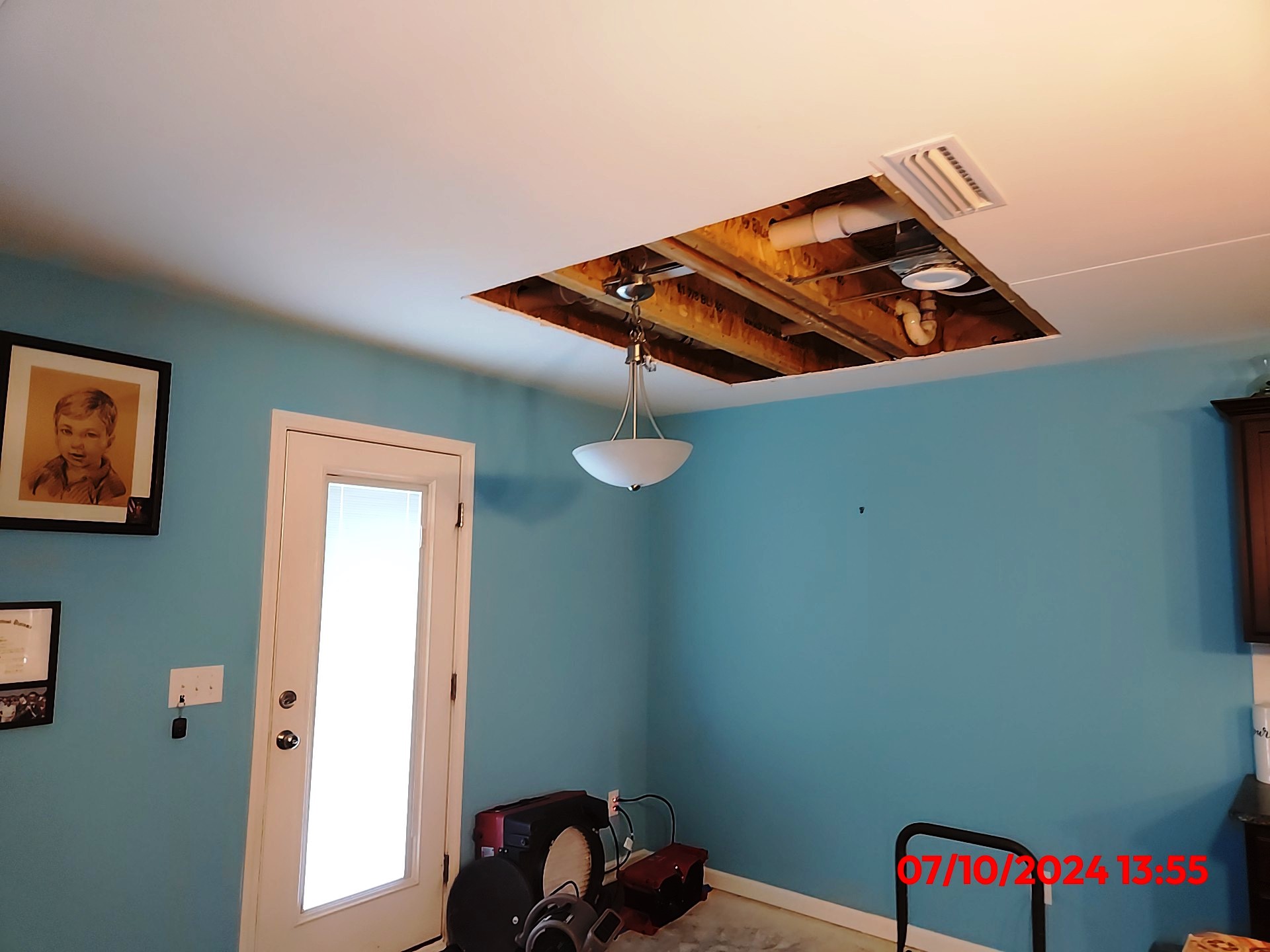
A yellow or brown ring on the ceiling means water got through at some point. Sometimes it's an old leak that has already stopped. Sometimes water is still getting into the drywall, insulation or framing above. You can't tell which just by looking. Master Restoration inspects ceiling stains for homeowners in Charlotte, Concord, Indian Trail, Matthews, Monroe, Stallings and Waxhaw. We find where the water came from, measure how wet the area is, and give you a clear plan.
Water runs along joists before it soaks through, so the stain isn't always right under the leak. Not sure what else to look for? Use our signs of water damage checklist to check the rest of the house.
It can be. A stain that is growing, feels soft, sags, or comes back after you paint it means moisture is still there. Wet drywall and insulation can grow mold. The EPA recommends drying wet building materials within 24–48 hours to help prevent mold. A dry, old stain from a leak that was fixed may only need sealing and paint. An inspection tells you which one you have.
If the fix needs a plumber or roofer, we tell you. We focus on finding, drying and repairing the water damage. Our water damage repair team handles the drywall, insulation and finish work once everything is dry, and our water damage inspection and repair page explains how a visit works.
It depends on the cause and your policy. Sudden leaks are often covered. Slow, long-term leaks often aren't. See our water damage insurance help page for what NC policies usually cover. Haven't filed a claim yet? We offer a free inspection before you file, so you know what you're dealing with when you talk to your insurer.
Master Restoration serves homeowners in Charlotte, Concord, Indian Trail, Matthews, Monroe, Stallings, and Waxhaw. See all the North Carolina areas we serve for more.
No. Even after it dries, the stain stays. The bigger question is whether the source is fixed and the materials above are dry.
Only once the leak is fixed and the area is fully dry, and then with a stain-blocking primer. If you paint too early, you can hide a problem that's still active.
If you know the source, call that trade. If you don't, or if the drywall is soft or sagging, start with an inspection. We'll help you find the source and deal with the water damage.
We schedule inspections Monday to Friday, 8am to 6pm. Call (704) 408-4794.
We help with documentation, photographs, estimates, and communication with your insurance company for damage caused by leaks.
Learn About Insurance Support